Last updated: November 13, 2026
Hurricane-Resistant Home Building in Southwest Florida: Costs, Materials & Compliance
Southwest Florida’s coastal communities face unique building challenges. Hurricane season brings real risks and building a hurricane resistant home requires understanding both the science and the investment. If you’re planning new construction or renovation in Naples, Fort Myers, or surrounding areas, hurricane resistant homes florida construction has become standard practice, not a luxury upgrade.
This comprehensive guide covers everything homeowners and builders need to know: material specifications, building code compliance, real costs, and how to work with local experts. Whether you’re constructing from scratch or retrofitting an existing property, the decisions you make today will protect your family and investment for decades.
The goal is clear: build smarter, stronger homes that withstand Florida’s most powerful storms while maintaining aesthetic appeal and energy efficiency.
Understanding Hurricane Resistant Home Design in Southwest Florida
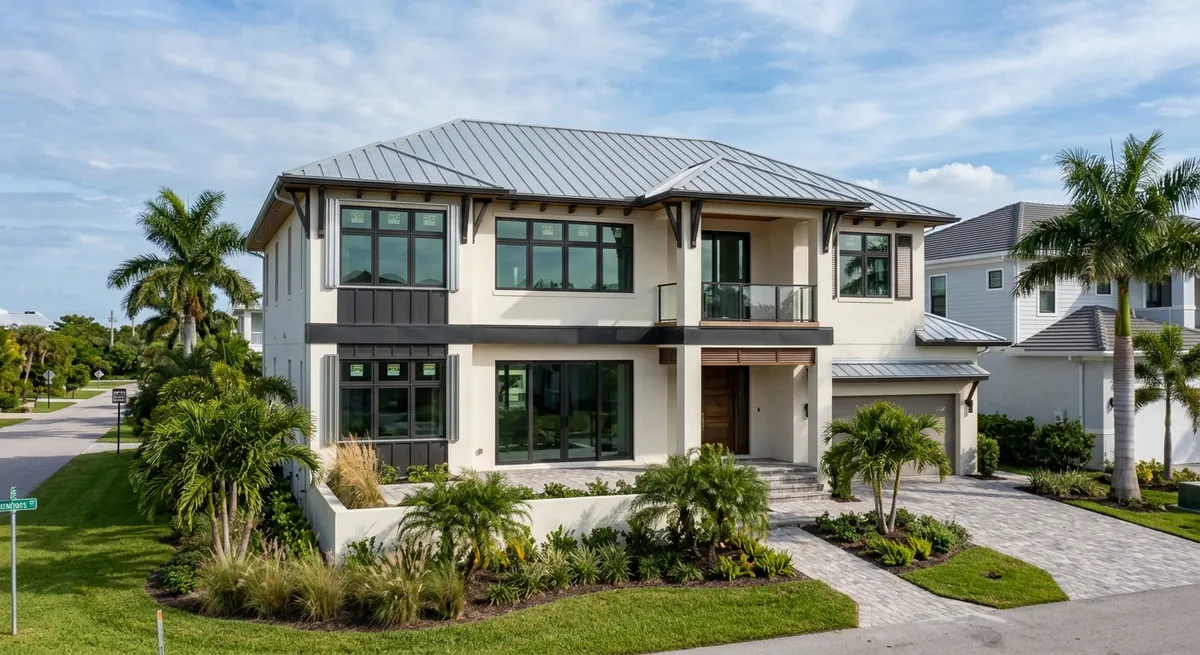
Hurricane resistant home construction in Florida isn’t about building a bunker. It’s about strategic engineering that protects occupants while maintaining livability. The philosophy centers on preventing water infiltration, maintaining structural integrity under extreme wind loads, and keeping the building envelope intact.
Modern hurricane resistant homes florida design integrates five critical systems: the roof system, window and door protection, structural reinforcement, drainage systems, and connection details. Each component must work together. A single weak point improperly sealed penetrations, inadequate roof-to-wall connections, or compromised exterior finishes can undermine the entire structure.
Southwest Florida custom home builders increasingly prioritize hurricane resistant design from the planning stage, not as an afterthought. This integration reduces costs and improves performance compared to retrofit solutions.
The Florida Building Code, updated most recently in 2023, establishes minimum standards for wind resistance. Homes must withstand design wind speeds based on their location. In Southwest Florida’s High-Velocity Hurricane Zones (HVHZ), design requirements are substantially more stringent than inland areas.
Impact Windows and Doors: The First Line of Defense
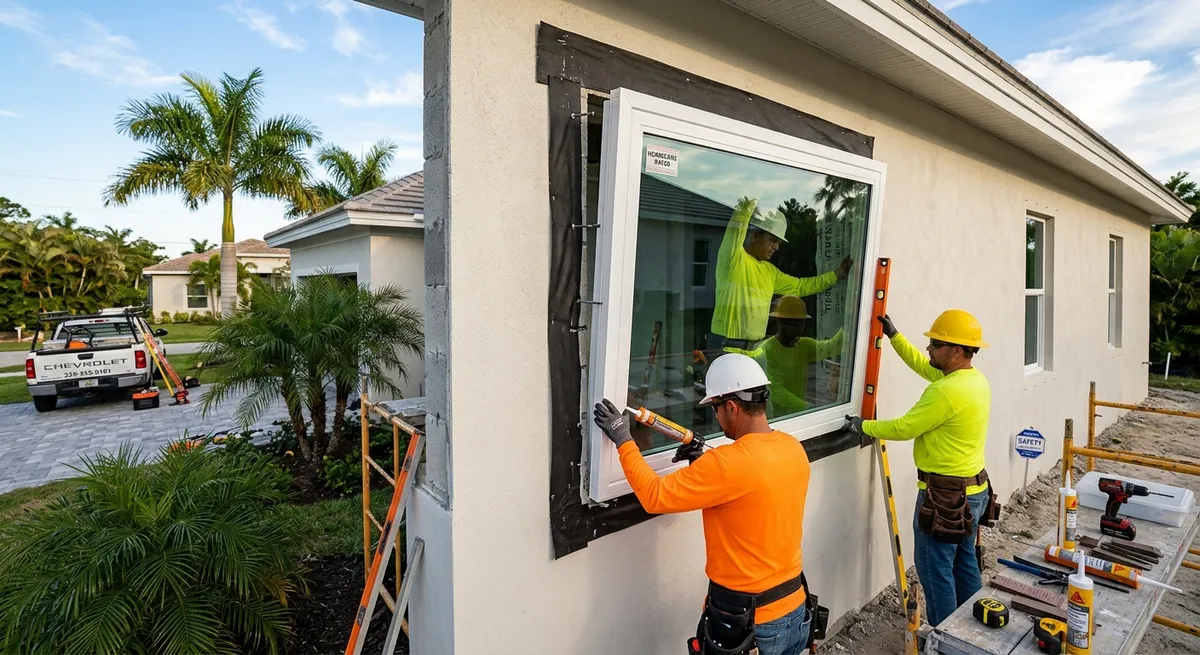
Impact windows florida builders specify are engineered specifically for hurricane conditions. These aren’t standard dual-pane windows with tinted glass. True impact windows feature laminated glass bonded to a rigid interlayer, typically polyvinyl butyral (PVB) or similar material.
When debris strikes impact glass, the outer pane breaks but the interlayer holds the fragments in place. This maintains the building’s pressure envelope critical for preventing catastrophic structural failure. The pressure differential between the outside (lower pressure during a hurricane) and inside can literally explode a building from the inside out if windows fail.
Impact windows florida specifications require meeting ASTM E1996 (Large Missile Impact) and ASTM E1886 (Windborne Debris) standards. Testing involves firing 9-pound 2×4 lumber at windows at 34 miles per hour, plus cyclic pressure testing. Only products passing these rigorous tests receive approval for HVHZ installation.
Beyond performance, impact windows offer additional benefits:
- Noise reduction (same lamination that protects from debris dampens external sounds)
- UV filtering (protects furnishings and reduces fading)
- Year-round energy efficiency
- Insurance discounts (typically 10-15% premium reduction)
- Improved resale value (documented in market analysis)
Cost varies by frame material and size. PVC frames cost less initially but show less durability in salt-air environments. Aluminum frames perform better coastal exposure but conduct heat more readily. Fiberglass frames offer optimal performance but premium pricing. Most Southwest Florida builders recommend impact windows florida installations in aluminum or fiberglass for long-term value.
Wind Resistant Home Design: Structural Engineering Essentials
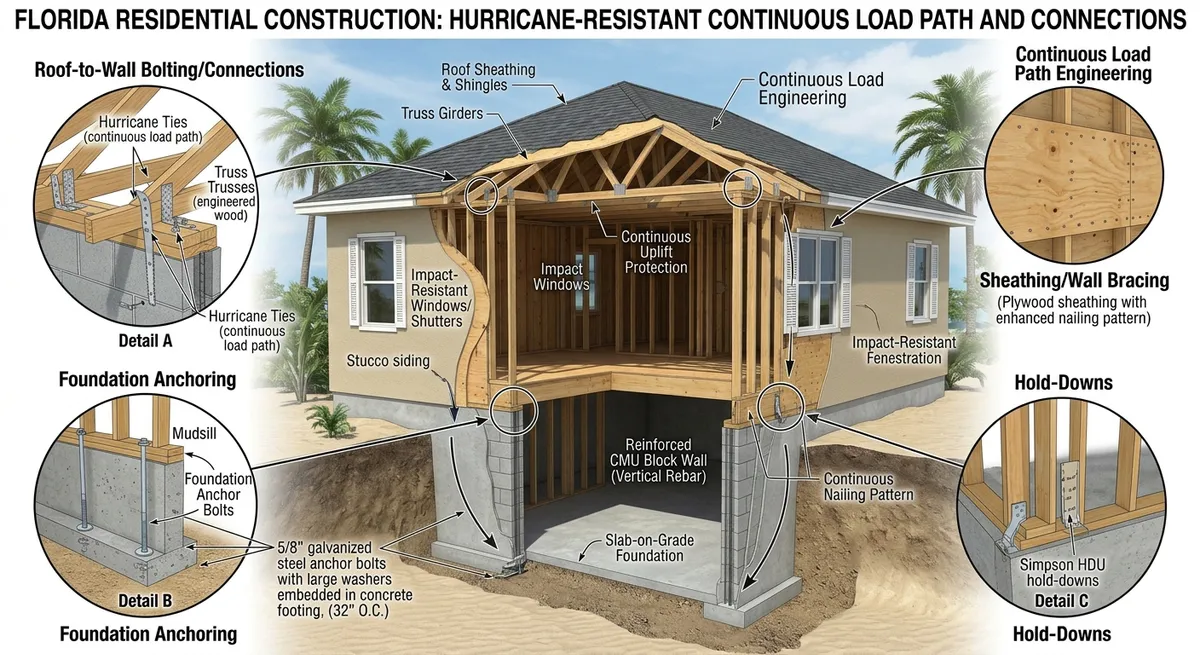
Wind resistant home design naples and throughout Southwest Florida depends on proper structural connections. Engineers focus on the “load path” how wind forces transfer from the roof, through walls, and into the foundation. Every connection must be specified and inspected.
Key structural elements include:
Roof-to-Wall Connections: Roof trusses or rafters must be directly bolted to the top plate using engineered hurricane ties. Many older homes had nailed connections only inadequate for modern wind speeds. Proper connections use stainless steel bolts with washers rated for specific wind loads.
Wall-to-Foundation Connections: Concrete foundation bolts must be spaced 6 feet maximum (some codes require 4 feet in HVHZ). Traditional 8-foot spacing is now prohibited in high-wind areas. Bolts transfer lateral forces into the foundation, preventing walls from lifting away.
Gable End Reinforcement: Gable ends are inherently weak, experiencing significant wind pressures perpendicular to the wall plane. Wind resistant home design naples specifications often require gable-end trusses with diagonal bracing or upgraded blocking patterns.
Roof Geometry: Simple, symmetrical roof shapes (4:12 to 6:12 pitch) perform better in hurricanes than complex geometries with multiple peaks, valleys, and dormers. Complex designs create pressure concentrations and weak points. Many architects now favor practical, storm-resistant designs over visually complicated rooflines.
Hurricane Proof Construction Materials: What Actually Works
Hurricane proof construction florida focuses on material selection that maintains performance under extreme conditions. Traditional building materials often fail during hurricanes not due to inherent weakness, but due to moisture damage and connection failures. Modern hurricane-proof construction emphasizes drainage, protection, and proven performance.
Exterior Cladding: Fiber cement board, James Hardie and similar products, outperform vinyl siding in hurricane conditions. Vinyl becomes brittle in salt air and fails under impact. Fiber cement resists moisture, maintains flexibility, and doesn’t degrade in UV exposure. Metal cladding (aluminum or steel) also performs well in salt environments.
Roofing Systems: Hurricane proof construction florida typically specifies standing-seam metal roofs or architectural asphalt shingles rated for high-wind areas. Metal roofs, though more expensive, offer 50+ year lifespans and superior wind performance. If asphalt shingles are specified, they must meet ASTM D3161 Class A or Class F standards for rated wind speeds.
Exterior Envelope Sealing: All penetrations conduit, plumbing vents, electrical outlets, HVAC terminations must be sealed with hurricane-rated sealants and backed with weather-resistant barriers. A single unsealed penetration can allow water intrusion affecting structural integrity for years.
According to Federal Emergency Management Agency (FEMA) research, roughly 80% of hurricane damage comes from water intrusion rather than direct wind damage. Proper envelope protection prevents most costly repairs.
Florida Building Code Compliance and Permitting Requirements
Hurricane resistant homes florida must comply with the Florida Building Code, administered at county level with some local amendments. Southwest Florida counties (Collier, Lee, Charlotte, DeSoto) each have specific requirements exceeding state minimums in some cases.
Key compliance areas:
Wind Speed Design Categories: Homes must be designed for category-specific wind speeds. Basic Wind Speed Maps in the Florida Building Code show design requirements varying from 145 mph (Inland) to 200 mph (Coastal High-Hazard Areas). Your specific address determines design requirements.
Manufacturer Certifications: All impact windows, doors, roofing materials, and fasteners must include manufacturer certifications proving compliance with relevant standards. Generic “hurricane-rated” claims without documentation are unacceptable to inspectors.
Engineering Documentation: Plans must include structural calculations demonstrating wind load resistance. Florida home building permits cost and timeline increases with engineering documentation requirements, but this is non-negotiable for hurricane resistant construction.
Installation Requirements: Code specifies installation methods for every material system. Fastener spacing, sealant application, and connection details must match code exactly. Inspectors verify compliance at multiple construction stages: foundation inspection, framing inspection, roof covering inspection, and final inspection.
Builders must maintain detailed documentation of material certifications, installation photos, and inspection sign-offs. This documentation becomes crucial for insurance claims and future sales.
Cost Analysis: Hurricane Resistant Home Construction Expenses
The most common question: how much does hurricane resistant home construction cost compared to standard building? The answer depends on how you measure, but transparency helps with planning.
Impact Windows and Doors: Impact windows cost $15-35 per square foot installed, compared to $5-12 for standard windows. For a 3,000 sq ft home with 400 sq ft of windows, this represents $4,000-$12,000 additional cost. Aluminum-frame impacts run higher than vinyl; fiberglass frames command premium prices.
Roofing Systems: Standing-seam metal roofing costs $12-18 per square foot installed, compared to $8-12 for architectural asphalt shingles. For a 2,500 sq ft roof (2,778 squares), this adds roughly $11,000-27,500. However, metal roofs last 50+ years versus 20-25 for shingles, improving long-term value.
Structural Reinforcement: Upgrading connections, adding gable bracing, and engineering documentation adds 2-4% to structural costs. For a $500,000 construction budget, this represents $10,000-$20,000.
Sealants and Exterior Protection: Premium exterior sealants, weather barriers, and flashing details add roughly 1-2% to exterior costs.
Total Premium: Building a properly engineered hurricane resistant home costs approximately 5-8% more than standard construction. For a $400,000 custom home, expect an additional $20,000-$32,000. For $600,000 construction, add $30,000-$48,000.
This premium pays dividends through:
- Insurance premium reductions (10-15% typical)
- Energy efficiency improvements (15-20% utility savings)
- Enhanced resale value (2-4% appreciation premium in hurricane-prone markets)
- Peace of mind and family safety
- Reduced storm damage risk and repair costs
According to Statista’s residential construction analysis, homes with documented hurricane-resistant features command measurable price premiums in Florida markets.
Retrofitting Existing Homes: Hurricane Resistant Improvements for Older Properties
Not every Southwest Florida homeowner is building new. Many existing homes predate modern hurricane codes and would benefit from strategic improvements. Hurricane-proofing existing homes requires prioritizing upgrades that offer maximum protection per dollar spent.
Priority 1: Roof Protection
Roof failure represents the most common entry point for water damage. Retrofit options include:
- Complete reroofing with modern, high-wind-rated shingles or metal
- Adding engineered hurricane clips/ties to existing roof structure (if framing is sound)
- Sealing all roof penetrations and checking flashing
Priority 2: Impact Windows and Doors
Replacing vulnerable window assemblies improves both safety and insurance costs. Homeowners often start with high-impact areas: windows facing prevailing wind directions, glass doors, and skylights.
Priority 3: Foundation and Connection Upgrades
If foundation bolts are missing or inadequate (homes built pre-1980s often have none), adding bolts improves lateral resistance significantly. This requires excavation and can be expensive but remains essential for older structures.
Priority 4: Exterior Envelope Sealing
Systematically sealing penetrations costs relatively little but prevents water intrusion that can damage structure over years. This includes soffit vents, attic access points, conduit entries, and mechanical penetrations.
Working with Builders: What to Expect and How to Choose
Selecting the right builder matters enormously for hurricane-resistant construction quality. This isn’t an area where cost-cutting or inexperience is acceptable.
Key Questions for Potential Builders:
- What specific wind speed design category do you use for this address?
- Do you employ an in-house structural engineer or contract with specialists?
- Can you provide examples of previous hurricane-resistant projects with verification?
- What is your inspection schedule and documentation process?
- How do you train crews on proper installation of impact windows and doors?
- What warranties do you provide on hurricane-resistant systems?
- Do you maintain certification with manufacturers (impact window suppliers, roofing companies, etc.)?
Choosing a home builder in Southwest Florida requires verifying their specific experience with hurricane-resistant construction standards. Experience matters builders who’ve worked through multiple hurricane seasons understand real-world performance issues standard builders might miss.
Insurance Benefits and Long-Term Value Proposition
One frequently overlooked aspect: homeowners insurance costs. Properly documented hurricane-resistant construction qualifies for significant discounts with most insurers.
Insurance companies offer discounts for:
- Impact-resistant windows and doors (typically 10-15%)
- Reinforced roof-to-wall connections (5-10%)
- Secondary water barriers (5%)
- Complete roof coverage with high-wind-rated materials (5-10%)
- Combination packages (cumulative discounts can reach 25-30%)
On an annual insurance premium of $2,000, a 20% discount saves $400 yearly $4,000 over a decade. This directly offsets construction premiums and improves home value simultaneously.
Beyond insurance, homes with documented hurricane-resistant construction appeal to insurance-conscious buyers. In Southwest Florida’s competitive market, this feature differentiates properties and supports resale value.
The Bottom Line: Building for Florida’s Future
Hurricane resistant homes florida construction represents practical wisdom, not excessive caution. With hurricane seasons becoming more active and storm intensity increasing, investing in proper construction protects families and finances. The 5-8% construction premium pays for itself through insurance savings, energy efficiency, and peace of mind within 10-15 years.
Modern building science, updated codes, and proven materials enable homeowners and builders to construct resilient homes that withstand extreme weather while maintaining attractive, functional designs. The homes Southwest Florida builders create today will be providing protection and shelter for decades.
Whether you’re planning a custom build or retrofitting an existing property, the time to prioritize hurricane resistance is now. Storm season arrives every year and proper construction ensures your home and family remain safe regardless of what nature brings.
Contact SW Florida Builders Group today for a consultation on hurricane-resistant home construction, renovation planning, or retrofit improvements. Our team brings decades of Southwest Florida building experience and expertise in modern hurricane-resistant design and materials.
SW Florida Builders Group brings 25+ years of combined experience in Southwest Florida residential and commercial construction, with specialized expertise in hurricane-resistant building design, Florida building code compliance, and coastal home construction. Our team has successfully completed hundreds of hurricane-resistant homes throughout Collier, Lee, Charlotte, and surrounding counties, working with architects, engineers, and homeowners to deliver resilient construction that protects families and preserves investments.