Last updated: September 22, 2026
Coastal and Humid Climate Home Renovation: How to Build for Southwest Florida
Renovating a home in Southwest Florida presents unique challenges that homeowners in temperate climates simply don’t face. The combination of salt air, intense humidity, hurricanes, and thermal stress creates an environment where standard building practices fall short. A coastal and humid climate home renovation requires specialized knowledge, premium materials, and construction methods specifically engineered to withstand the region’s demanding conditions. This comprehensive guide walks you through everything you need to know to protect your investment and ensure your renovated home stands strong for decades to come.
Whether you’re planning a kitchen remodel, bathroom update, or complete structural renovation, understanding how humidity and coastal salt exposure affect building materials is essential. The choices you make today from insulation types to exterior finishes directly impact maintenance costs, energy efficiency, and long-term property value.
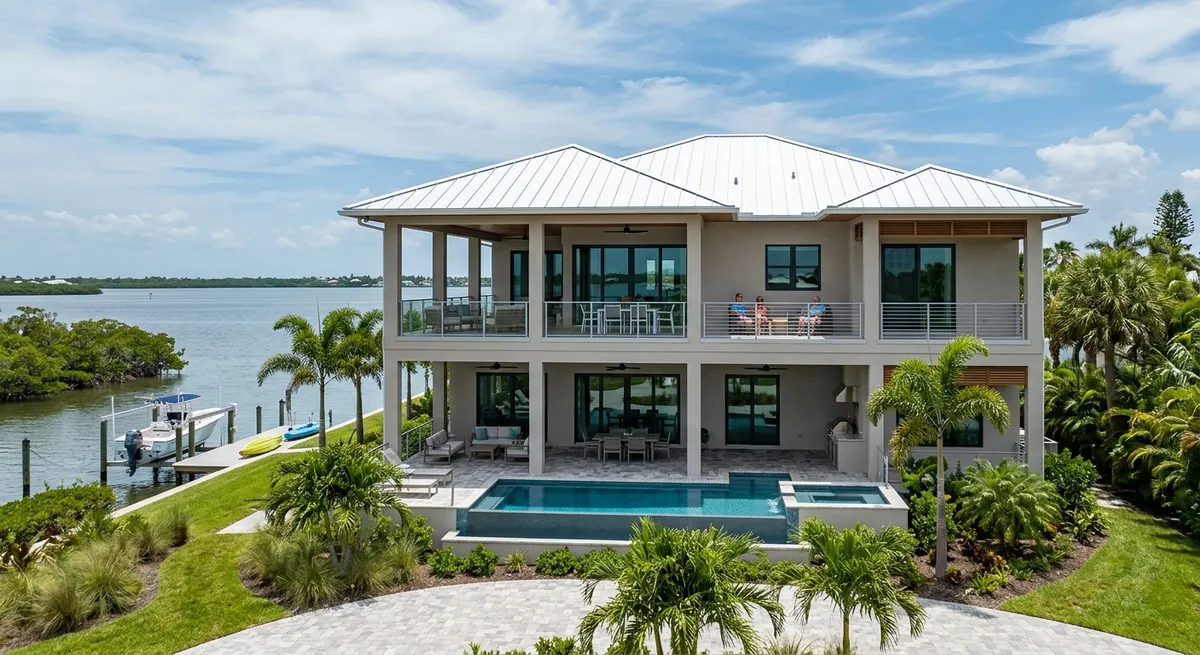
Understanding Southwest Florida’s Climate Challenges for Home Renovation
Southwest Florida’s climate presents a perfect storm of renovation challenges. With average humidity levels consistently above 70 percent and salt spray reaching inland properties, NOAA data shows that the region experiences some of the most corrosive conditions in North America. During hurricane season (June through November), wind speeds can exceed 150 mph, and moisture intrusion becomes a critical structural concern.
The primary threat to coastal and humid climate home renovation success is moisture accumulation within walls, attics, and crawl spaces. This invisible enemy creates ideal conditions for mold growth, wood rot, and structural deterioration. Unlike renovations in drier climates where mistakes might go unnoticed for years, Southwest Florida’s aggressive environment accelerates failure rates of substandard materials and installation techniques.
Salt Spray Corrosion and Metal Degradation
Salt spray doesn’t just affect coastal properties directly adjacent to beaches. Research indicates salt corrosion penetrates 10-15 miles inland, attacking ferrous metals, fasteners, and unprotected steel components. Standard galvanized hardware corrodes within 5-7 years, while stainless steel grade 316 resists degradation for 20+ years. When planning your renovation, every metal element from roof fasteners to door frames should specify marine-grade stainless steel specifications.
Humidity-Related Material Failure Rates
Interior humidity above 60 percent accelerates deterioration of drywall, insulation, and wood framing. The EPA identifies sustained humidity over 55 percent as the threshold where mold begins to flourish. Southwest Florida homes regularly experience interior humidity levels of 65-75 percent without proper ventilation and dehumidification systems, making moisture management the cornerstone of any lasting renovation.
Essential Materials for Humid Climate Home Renovation Projects
Standard construction materials fail prematurely in Southwest Florida’s aggressive environment. Coastal and humid climate home renovation success depends on selecting engineered materials specifically designed for moisture resistance, salt corrosion immunity, and thermal cycling resilience. The upfront material cost premium typically 15-30 percent higher than standard alternatives pays dividends through reduced maintenance and extended service life.
Impact-Resistant Windows and Doors
Impact window installation is non-negotiable for Southwest Florida renovations. These laminated glass units resist both hurricane-force winds and moisture infiltration, maintaining structural integrity during storm surge events. Standard windows allow water penetration at frame-to-wall junctions; impact windows feature marine-grade seals rated for saltwater environments and condensation-resistant framing materials.
Frame materials matter as much as glass performance. Vinyl frames absorb moisture and degrade; marine-grade aluminum with thermal breaks and rubber gaskets withstand the climate indefinitely. Budget $400-700 per window for quality impact units installed by certified professionals.
Moisture-Resistant Drywall and Wall Systems
Standard drywall becomes a liability in humid climates. Moisture-resistant (“green board”) drywall prevents mold growth but still absorbs water. For coastal renovations, specify cement board, fiber-reinforced panels, or closed-cell spray foam instead. These alternatives are mold-proof, maintain structural integrity when exposed to moisture, and won’t contribute to mold proliferation if humidity spikes temporarily.
Drywall repair in Southwest Florida often involves replacing moisture-damaged standard drywall with superior alternatives. While the upfront cost runs 20-40 percent higher, the elimination of moisture-related callbacks and warranty claims justifies the investment immediately.
Roofing Materials for Salt and Humidity Exposure
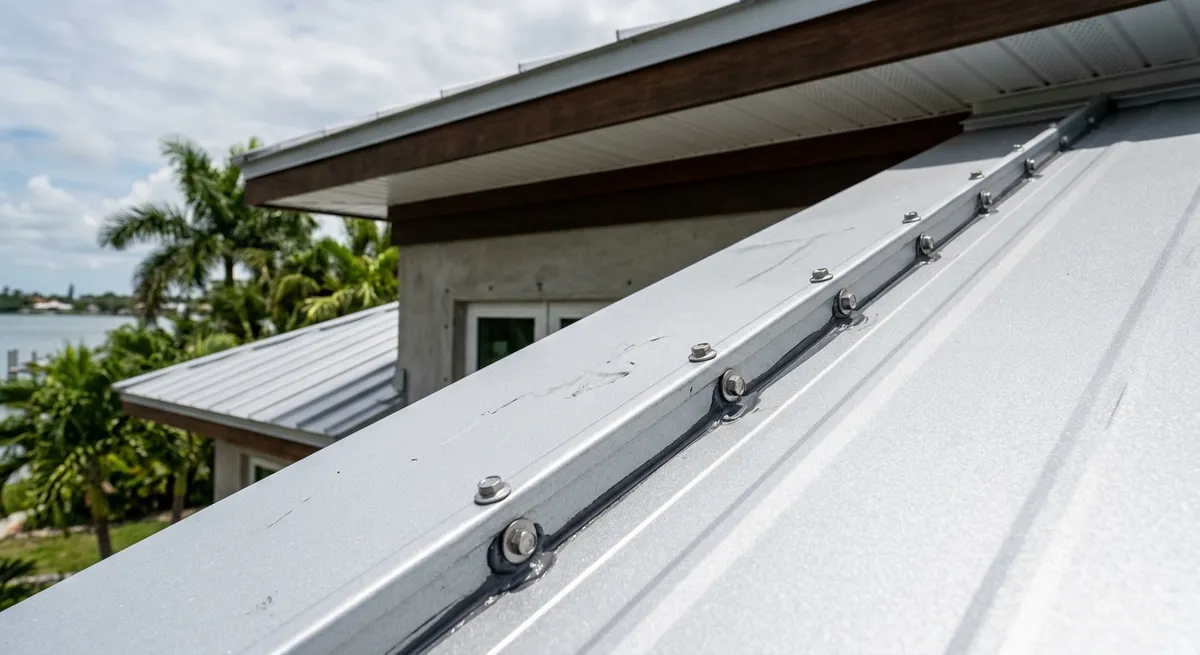
Metal roofing with marine-grade coatings outperforms asphalt shingles in coastal areas by 15-20 years. Asphalt deteriorates under intense UV radiation and salt spray within 15-20 years; quality metal roofing with Kynar 500 or Polyvinylidene Fluoride (PVDF) coatings lasts 40-50 years. Every fastener must be stainless steel grade 316; even a single galvanized fastener will corrode and leak within years.
Standing seam metal roofing with concealed fasteners eliminates the primary failure point exposed fastener corrosion. While costing 15-25 percent more than architectural metal, the elimination of fastener-related leaks pays for the premium within the first decade.
Moisture Control Systems and Ventilation Strategies
Mechanical dehumidification and strategic ventilation form the backbone of moisture management in coastal and humid climate home renovation projects. Without intentional moisture control, even premium materials will deteriorate as interior humidity accumulates. Southwest Florida homes require integrated systems that remove moisture at the source, prevent infiltration, and manage condensation.
Whole-Home Dehumidification Systems
Standalone portable dehumidifiers prove insufficient for entire homes. Central dehumidification integrated with HVAC systems maintains humidity between 45-55 percent year-round, protecting materials while optimizing comfort. Commercial-grade systems include automatic sensors, drainage connections, and energy-efficient operation that prevents the “chase” where HVAC cooling removes moisture while heating adds it back.
Installation cost ranges $2,500-4,500 depending on system size and existing ductwork, but energy savings of 10-15 percent and elimination of moisture-related damage justify the investment. Home renovation cost guide for Southwest Florida projections consistently show dehumidification as the highest ROI moisture management investment.
Crawl Space and Attic Ventilation
Passive ventilation proves inadequate in Southwest Florida’s high-humidity environment. Ridge vents and soffit vents move some air but insufficient volume prevents moisture accumulation in attics and crawl spaces. Active ventilation systems with humidity sensors turn on when moisture levels exceed 55-60 percent, actively exhausting moist air while preventing backflow through building envelope penetrations.
Encapsulated crawl spaces with dehumidification outperform traditional vented crawl spaces by preventing moisture from rising into living spaces and affecting indoor air quality. The upfront cost of $3,000-6,000 prevents tens of thousands in water damage, mold remediation, and structural repairs over 20 years.
Smart Vapor Barriers and Underlayment
Traditional plastic sheeting traps moisture inside wall cavities. Intelligent vapor barriers allow moisture movement based on seasonal humidity patterns, drying to the interior during low-humidity periods while resisting moisture intrusion during high-humidity or rain events. These smart membranes cost 30-50 percent more than standard barriers but prevent the moisture-trapping catastrophes that lead to mold and structural failure.
Protecting Your Renovation Against Hurricane Damage and Water Intrusion
The definition of successful coastal and humid climate home renovation includes hurricane preparedness. Water intrusion during storm events can destroy months of renovation work within hours. Modern building science emphasizes redundant barriers, proper drainage, and wind-resistant fastening systems that keep water out even when design pressures exceed 150 mph.
Air Sealing and Envelope Integrity
Water follows air. Pressure differences created by wind push water through the tiniest gaps. Professional-grade air sealing using expanding foam, caulk, and membrane tape eliminates pathways for water infiltration. Every penetration electrical outlets, plumbing, HVAC ducts must be sealed with marine-grade sealants rated for temperature cycling and UV exposure.
Blower door testing after renovation verifies air tightness. Southwest Florida best practices target air leakage of less than 3 air changes per hour at 50 Pascals pressure, significantly tighter than standard building codes. Moisture and mold prevention strategies depend fundamentally on this envelope control.
Rainscreen Assemblies and Drainage Planes
Rainscreen designs create an air gap behind exterior cladding, allowing water that penetrates the outer layer to drain harmlessly away from structural components. This redundant approach assumes the outer barrier will be breached (which it eventually will) and provides secondary protection. Modern coastal renovations specify rainscreen assemblies with continuous slope toward drain outlets, preventing water pooling and saturation.
Interior Renovation Considerations for Humid Climates
Interior spaces kitchens, bathrooms, and living areas face unique moisture challenges in Southwest Florida homes. The combination of daily high humidity and local moisture sources (showers, cooking, cleaning) creates ideal conditions for mold growth and material degradation. Strategic material selection and ventilation in these high-moisture areas prevents problems before they develop.
Kitchen and Bathroom Renovation Materials
Bathroom remodeling in Southwest Florida requires moisture-resistant materials throughout. Tile over cement board (not drywall), solid surface or stainless steel countertops, and vapor-sealed cabinetry prevent water damage and mold growth. Avoid natural wood in wet areas; composite and engineered alternatives resist moisture while providing aesthetic appeal.
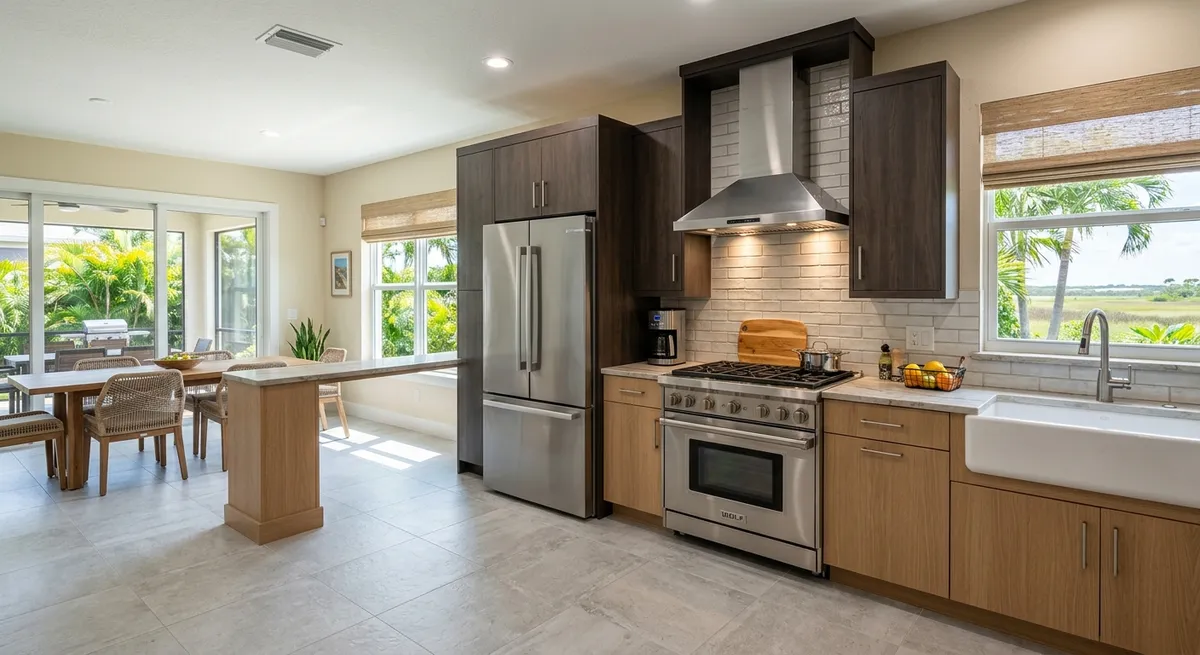
Kitchen remodeling costs in Southwest Florida increase when specifying moisture-resistant materials, but the premium prevents costly repairs and maintains food safety through mold prevention. Stainless steel appliances resist corrosion far better than painted surfaces. Under-counter ventilation near sinks exhausts moisture at the source.
Flooring Selection for Humid Environments
Hardwood flooring absorbs moisture and warps; luxury vinyl plank (LVP) with waterproof underlayment or porcelain tile over cement board performs reliably in humid conditions. These materials maintain dimensional stability across 30-70 percent humidity ranges and resist mold growth. Proper slope toward drains prevents standing water accumulation in bathrooms and kitchens.
Working with Qualified Coastal Renovation Contractors
The technical demands of coastal and humid climate home renovation exceed the expertise of general contractors unfamiliar with the region’s specific challenges. Qualified professionals understand marine-grade material specifications, proper installation sequencing, and building science principles that protect your investment from the region’s aggressive environmental conditions.
Ask prospective contractors about their experience with moisture-resistant material systems, hurricane-resistant construction techniques, and post-renovation humidity management. Verify that they understand the differences between standard building practices and coastal-specific requirements. Request references from previous Southwest Florida clients and inspect their completed work for quality and attention to detail.
Kitchen renovation contractors and general renovation specialists should document their understanding of humidity control, material specifications, and testing protocols. Professional contractors welcome discussions about vapor barriers, dehumidification systems, and moisture management these conversations reveal their depth of expertise.
Cost Planning and Return on Investment for Coastal Renovations
Coastal and humid climate home renovation budgets run 20-40 percent higher than equivalent renovations in temperate climates, primarily due to material upgrades and specialized installation requirements. However, the premium protects your property value, reduces long-term maintenance costs, and prevents catastrophic damage from moisture and salt exposure.
Home renovation financing options for Southwest Florida homeowners include construction loans, home equity lines of credit, and renovation-specific lending programs. Lenders often recognize the value of proper coastal renovation practices and may offer favorable terms for projects meeting established building science standards.
Calculate ROI beyond simple resale value. A properly executed coastal renovation reduces annual maintenance costs by thousands no mold remediation, no corrosion repairs, no premature material replacement. Energy savings from dehumidification systems, high-performance windows, and proper insulation installation accumulate to significant long-term benefits. Most homeowners recover 60-75 percent of renovation investment through avoided repairs, reduced utility costs, and maintained property value over 15-20 years.
Long-Term Maintenance Strategies Post-Renovation
Successful coastal and humid climate home renovation extends beyond completion day. Ongoing maintenance protocols protect your investment and catch developing issues before they become expensive. Establish a quarterly inspection schedule checking for salt residue accumulation, fastener corrosion, seal degradation, and moisture intrusion indicators.
Regular Inspection and Maintenance Protocols
Quarterly walkthroughs of exterior surfaces, roof, windows, and drainage systems catch problems early. Document conditions with photos; compare seasonal changes to establish baseline degradation rates. Professional annual inspections from qualified contractors cost $300-500 but prevent $5,000-15,000 emergency repairs through early detection.
Cleaning and Preservation of Marine-Grade Materials
Salt deposits on exterior surfaces, windows, and metal roofing accelerate corrosion. Fresh water rinses every 3-6 months remove accumulated salt. Use soft brushes and non-abrasive techniques; aggressive cleaning scratches protective coatings. Apply corrosion inhibitors to stainless steel fasteners and metal components annually to maintain long-term protection.
Conclusion: Building for Southwest Florida’s Future
Coastal and humid climate home renovation success requires understanding your region’s unique environmental demands and making material and installation choices that prioritize durability, moisture management, and resilience. The premium you invest in quality materials, professional installation, and integrated moisture control systems pays dividends through avoided repairs, lower utility costs, and maintained property value. Southwest Florida’s aggressive climate demands excellence; mediocre construction fails rapidly and expensively.
Don’t let your renovation fall victim to moisture problems, salt corrosion, and structural failure. Contact SW Florida Builders Group today to discuss your coastal renovation project with professionals who understand the technical demands of building in this unique environment. Our team specializes in moisture-resistant material systems, hurricane-resistant construction techniques, and long-term durability strategies that protect your investment for decades.
SW Florida Builders Group brings 20+ years of specialized experience in coastal and humid climate home renovation throughout Southwest Florida. Our team includes certified building science professionals, licensed contractors, and moisture management specialists committed to building renovation projects that withstand the region’s unique environmental challenges. Every project receives comprehensive moisture control planning, marine-grade material specification, and professional installation that exceeds industry standards.